Why Community-Specific Snow Removal Policies Matter: Treating Paved and Dirt Roads Differently
Community associations in the Pocono Mountains face unique winter maintenance challenges. Unlike many suburban developments that consist entirely of paved roads, many mountain communities maintain a combination of paved and dirt roadways. While residents may expect every road to receive the same treatment during a snowstorm, effective snow removal policies recognize that different road surfaces require different maintenance strategies. A thoughtful approach helps balance safety, road preservation, environmental concerns, and responsible use of association resources.
Treating Paved and Dirt Roads Differently
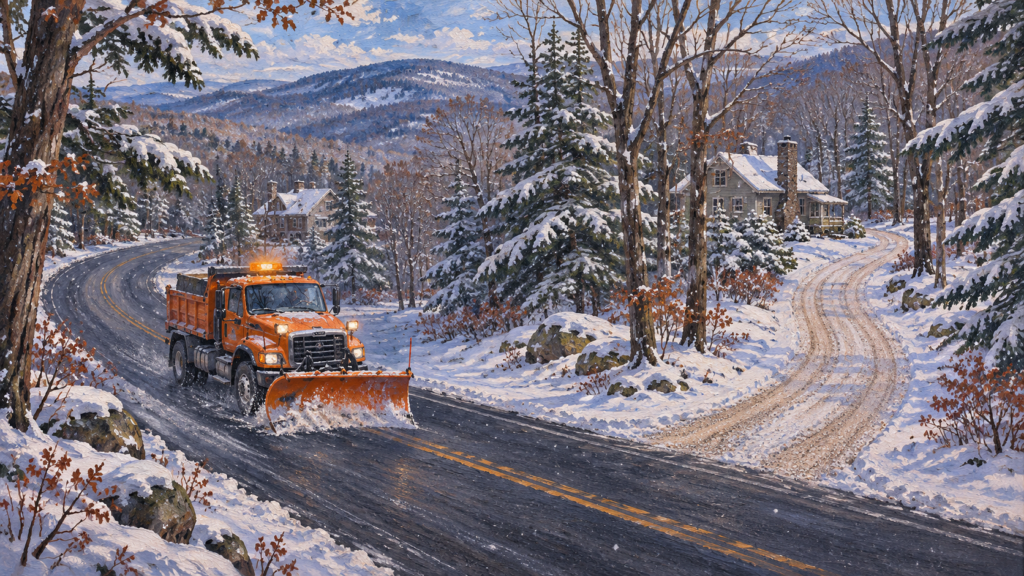
One of the most important considerations when developing a snow removal policy is understanding how winter weather affects different road surfaces and how the equipment used can impact their long-term condition. Paved roads are generally more durable and can withstand more frequent plowing and the use of de-icing materials to improve traction and reduce ice buildup. Dirt roads, however, are more susceptible to damage from aggressive plowing, freeze-thaw cycles, erosion, and excessive use of de-icing products. Because of these differences, many communities establish separate service thresholds for each road type. For example, paved roads may be plowed after approximately two inches of snowfall, while dirt roads are not plowed until three inches have accumulated.
Equally important is using the proper equipment. Steel cutting edges can accelerate wear on both paved and unpaved surfaces and increase wear and tear on plow equipment. Rubber-edged plow blades create a skimming effect that removes snow while minimizing damage to road surfaces and equipment, allowing for more effective application of salt, brine, or other de-icing materials. On unpaved roads, properly adjusted plow shoes help maintain a consistent clearance between the blade and road surface, preventing the removal of gravel and reducing rutting and erosion. By matching both plowing practices and equipment to the road surface, communities can maintain safer driving conditions, preserve infrastructure, and reduce long-term maintenance costs.
Prioritizing Routes in Mountain Communities
Geographical considerations such as topography, climate and transportation routes are other critical factors in mountain communities. Steep roadways, sharp curves, and higher elevations can create hazardous driving conditions even when snowfall totals are relatively low. For this reason, many communities prioritize main travel routes, steep hills, entrance roads, and bus routes before addressing lower-priority areas. This strategy helps maintain safe access for residents, visitors, school transportation, and emergency responders.
Setting Realistic Expectations During a Storm
Equally important is setting realistic expectations. A successful snow removal program is not designed to keep every road completely bare throughout an active storm. Rather, the goal is to maintain safe and passable conditions while weather events are occurring and then restore normal driving conditions as efficiently as possible once the storm subsides. Factors such as snowfall intensity, visibility, temperature, equipment availability, and employee safety all influence the speed and effectiveness of snow removal operations. Communities that clearly define their service goals often experience fewer resident complaints and greater understanding during severe weather events.
Partnering with Vendors and Communicating Expectations
Whether snow removal is performed by association employees or a contracted vendor, community managers play an essential role in planning and oversight. Associations that utilize snow removal contractors should request a detailed written snow management plan outlining response procedures, storm monitoring practices, treatment methods, equipment availability, and service priorities. The most successful relationships are collaborative, with management and vendors working together to develop expectations that reflect the unique characteristics of the community.
For associations with multiple road surfaces, maintaining an accurate road map that identifies paved roads, dirt roads, steep grades, and priority access routes can be invaluable. This information helps vendors and maintenance staff apply the appropriate treatment methods, ensure consistency throughout the community, and avoid confusion during storm events.
Communication with residents is essential. Once a snow removal policy has been established, community managers should proactively inform homeowners about what to expect before, during, and after winter storms. Regular emails, website updates, social media posts, text alerts, or community notifications can provide valuable information regarding plowing priorities, anticipated response times, parking restrictions, and weather-related updates. When residents understand the association’s approach and the reasons behind it, they are more likely to maintain realistic expectations and support operational decisions during challenging weather conditions.
For communities with a mix of paved and dirt roads, the most effective snow removal policies recognize that a one-size-fits-all approach rarely works. By tailoring maintenance practices to road conditions, prioritizing safety, preserving infrastructure, and communicating clearly with residents, community associations can create a winter maintenance program that is both practical and sustainable for the unique demands of mountain living.
A well-written snow removal policy does more than direct plowing operations. It serves as a roadmap for boards, managers, vendors, and residents, ensuring everyone understands how winter weather will be managed before the first snowfall arrives.
About the Author
Gabriella Garofano, LCAM, is a licensed community association manager with FirstService Residential. In this article, she shares how Pocono community associations can plan for snow removal on paved and dirt roads, coordinate with vendors, and set clear expectations for residents.